


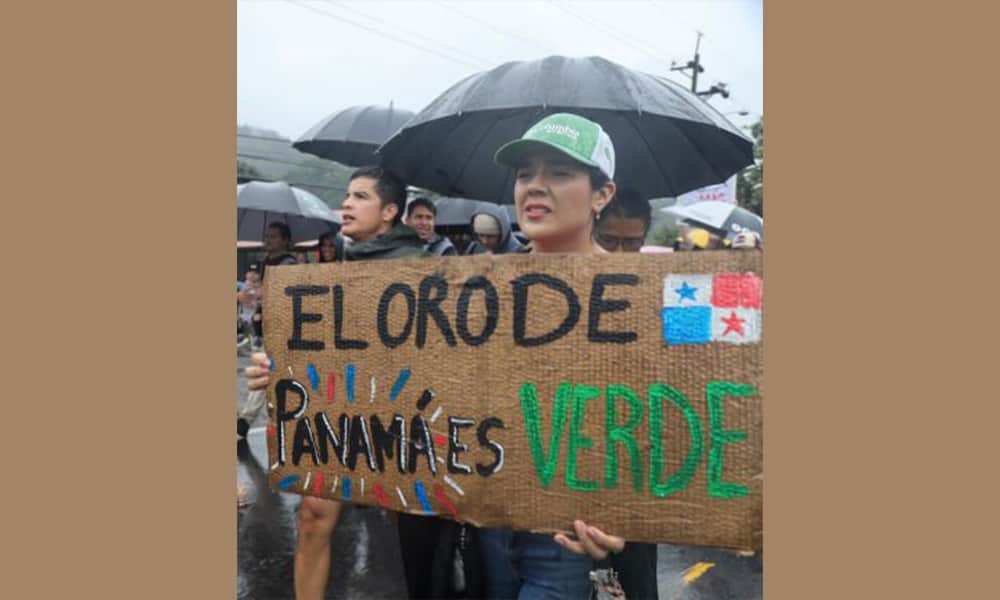
Even though I was traveling to Panama last November, I didn't travel very far. Protests erupted, roads were blocked, supply chains were delayed, travel plans were canceled and the entire country came to a virtual standstill. reason? Citizens express dissatisfaction with the government's renewal of a contract with First Quantum, a Canadian mining company that extracts copper from an environmentally sensitive region of the Caribbean coast.
Some were concerned about revenue going to foreign corporations, while others cited encroachment on indigenous land. But the main reason Panamanians took to the streets was out of concern about the negative impact the mines would have on the environment.
The situation was finally resolved on November 28, when the Panama Supreme Court ruled that the contract was unconstitutional. While this is seen as a major victory for the environmental movement, some see it as a missed opportunity for Panama due to the negative impact on jobs and gross domestic product (GPD).
This begs the question. In a world with increasing demands on finite resources, Panama, a country rich in natural resources, should stop relying on foreign capital and move from a service-based economy to one that relies on sustainable industries such as ecotourism. Is it?
Panama does not have to look far for a successful economic model based on ecotourism. Our neighbor to the north, Costa Rica, has shown that investing in natural spaces is a sustainable model that can last for years to come.
Using the example of Costa Rica is particularly useful for Panama. Because Costa Rica shares many of the same ecosystems, from rainforests, dry forests, and mangroves in the lowlands to cloud forests and páramos in the mountains.
Additionally, the two countries share a rich biodiversity. This is due in part to the geographic location of the Isthmus of Panama, which connects North and South America, making it a literal land bridge that allows wildlife from both continents to move freely across this narrow strip of land.
Moreover, Panama's ecological richness is not limited to land-based destinations. Maritime areas such as Bocas de Toro, Coiba and the Pearl Islands are known for their world-class diving spots. These combined factors make Panama an ideal place to explore ecotourism opportunities.
Panama therefore has the potential to develop an ecotourism sector, but the question is whether there is public support to do so. There are countless examples of “paper parks” throughout the developing world. This is a nationally recognized conservation area with no government funding to properly implement and maintain the ecological integrity of the designated area.
This lack of financial support leaves these places ripe for exploitation through activities such as poaching, timber extraction, and illegal mining. As Costa Rica has shown, community support is essential for the success of sustainability projects.
When Santa Rosa was declared a national park in 1971, Costa Rica's Ministry of Environment and Energy (MINAE) had to decide what to do about 40 families illegally occupying and vandalizing state-owned land. . Instead of evicting them and finding new homes, the government paid for their relocation.
As explained in David Raines Wallace's book The Quetzal and the Macaw, which chronicles the history of Costa Rica's national park system, this was the result of visionary college students Mario Boza and Álvaro Ugalde. It was a decision driven by action. .
They said that if ecotourism were to flourish in Costa Rica, it would require support not only from the people but also from the government, and that forcing people off the land, even if the land is not theirs, would be counter-productive. I knew it could happen. It is fueling feelings of anger towards MINAE and the government as a whole, putting their vision for a greener future at risk.
Local residents were trained and offered jobs in the newly established national park. The national park required park rangers, naturalist guides, and various management positions to carry out daily operations.
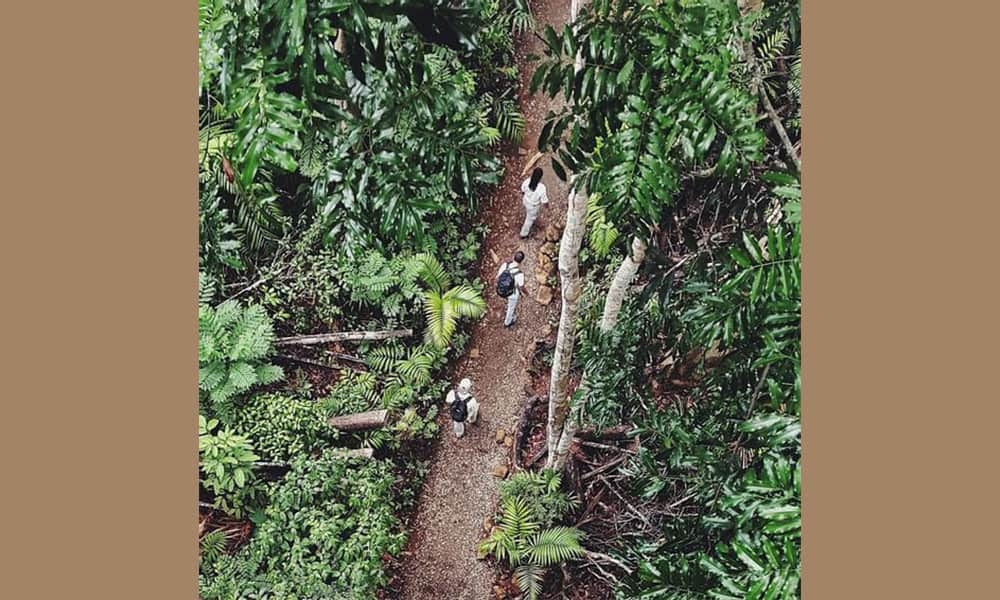
People visiting Gamboa Nature Reserve in central Panama
The idea of protecting ecosystems rather than exploiting them took root by focusing on community-based ecotourism projects where citizens can experience the direct benefits of conservation in their daily lives. It didn't happen overnight, but Costa Rica has become a model for how to successfully invest in sustainability.
In Panama, the success of last year's protests seems to suggest that not only the will but also the momentum exists to make ecotourism a success, and that Panamanians are ready to look to a greener future. .
Of course, there are some lessons to be learned to ensure that ecotourism does not harm the very ecosystems it seeks to protect. For example, Manuel Antonio National Park in Costa Rica has fallen victim to its popularity. Because of its reputation for biodiversity and its proximity to San Jose, the park attracts large numbers of people, increasing stress on the environment. This includes not only increased pedestrian traffic, but also the infrastructure needed outside the park boundaries to accommodate increased demand.
The limited wildlife within national parks relies on biological corridors to ensure healthy populations, so development has no impact on the genetic diversity within these animal populations. may give. Having a well-planned infrastructure in place to support the burgeoning ecotourism industry is critical. The Central African country of Gabon devoted 10% of its territory to the creation of 13 national parks in 2002 with the aim of creating a viable ecotourism industry.
This was a reasonable goal because Gabon is home to unique and charismatic species such as mandrills, forest elephants, and western lowland gorillas. The goal of this country, which calls itself the “Last Eden,” was to become the Costa Rica of Africa. But even in 2024, Gabon has yet to see a return on its environmental investments due to a lack of available roads and trained tour guides (not to mention last year's coup).
Of course, for a country to thrive in an ecotourism-driven economy, it is important to have a stable government. Panama has a lot to be optimistic about here. The power of protest is a sign of a healthy democracy. Nongovernmental organizations (NGOs) and international donors supporting large-scale conservation projects invest their capital where they know their money will not go directly into the pockets of corrupt bureaucrats or big business executives. A man who ruled a banana republic in Central America a century ago.
From a human rights perspective alone, the fact that Panama was able to harness grassroots energy to end an environmental catastrophe is evidence of growing democratic optimism in the region, and other This is also an example of Central American countries. (This was also seen in the protests in Guatemala, which ensured that duly elected President Bernardo Arevalo would take office in January).
In an interview with the North American and Latin American Conference (NACLA), Central American researcher Jorge Cuellar said that Panama's people have no power to stand up not only to the Americas, but also to other developing countries in Africa and Asia. He said he has shown that there is. Counter foreign interests and actions that degrade the country's natural resources.
Thus, by demonstrating that its people can influence policy through mobilization, Panama may spark a revolution. Ideally, the revolution will be environmentally friendly.
Article written by Ryan Meczkowski Founder and Naturalist Guide CR Naturalist Experiences
