


Despite being banned by a global treaty, mercury-added skin lightening products (SLPs) remain the world's largest number of skin lightening products (SLPs), according to a new report from the Zero Mercury Working Group (ZMWG) released on Friday, October 20th. This report collected, which is sold to unsuspecting consumers by some of the online retailers in hand, provides further evidence that dangerous SLPs are widely available in the global market. .
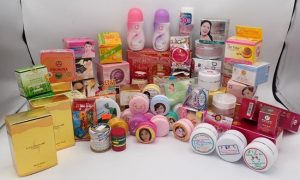
NGO partners from 12 countries purchased 213 suspect SLPs from 23 online platforms. Of these, 191 items (90%) had mercury concentrations ranging from 1.18 to 74,800.00 ppm, exceeding the 1 ppm limit mandated for cosmetics by many governments and the Minamata Convention.
In this report, Parties to the Minamata Convention's Fifth Conference of the Parties (COP5) discussed amendments proposed by the African region that seek to address enforcement loopholes and implementation failures related to mercury-added cosmetics. The announcement comes at a critical time as preparations are underway for the
The African amendments aim to strengthen existing treaty provisions by:
- The manufacturing and trading of all mercury-added cosmetics, not just those that contain mercury exceeding 1 ppm, will be prohibited.
- Reduce the commercialization of mercury-doped SLP, including sales, sales offers, marketing, advertising, and exhibitions.
- Coordinate interagency, bilateral and/or regional measures to phase out mercury SLPs.
- Increase public awareness of the dangers of mercury SLP.
The report highlights that there are currently no effective controls in place to prevent mercury SLP from being manufactured and sold online. Online platforms continue to shirk their responsibility to stop unscrupulous merchants from advertising, marketing and selling illegal mercury-doped SLP, conditioning them to adopt Eurocentric beauty standards influenced by “colorism” perpetuating inequities faced by people of color, especially women and girls. .
Mercury brightens the skin by inhibiting the production of melanin, which also helps remove age spots, freckles, age spots, and wrinkles. However, it can cause rashes, skin discoloration, and blotches, and it can enter the body through absorption through the skin, inhalation, or orally.
The findings of this report, along with a recent report commissioned by the Natural Resources Defense Council, support mercury compounds as essential ingredients for SLP. As a result, the report recommends that COP5 should lay the groundwork for regulating mercury compounds and subjecting them to trade restrictions.
Zero Mercury Working Group Coordinator Michael Bender said: “Despite the treaty’s ban on manufacturing and trade, the proliferation and online sale of mercury cosmetics continues. However, if the African regional amendment banning the advertising and sale of illegal SLPs is adopted, online marketing It may help prevent this.”
Rico Euripidou, Campaign Coordinator at Groundwork South Africa, said: “For many years, the African region has taken a leadership role in phasing out mercury in products such as lighting, dentistry and now skin whitening cosmetics. Toxic cosmetics are a global mercury crisis that requires concerted international cooperation.”
Charline Chewar, mercury policy officer at the European Environment Agency, said: “If approved, the amendments would complement and strengthen the current treaty and close loopholes that allow the advertising, display and indiscriminate sale of mercury-doped SLP. It will be helpful.” It also reflects the desire to drive the change envisioned by the Treaty on Making Mercury History. ”
Leslie Adgame, Executive Director of Sustainable Research and Action for Environmental Development (SRADeV Nigeria), said: “In Nigeria, all cosmetic products manufactured, imported, exported, sold, distributed or used in Nigeria Despite this, online retailers and e-commerce giants continue to flaunt the rules. Regulators are working to implement the Minamata Convention to improve consumer protection. , the time has come to aggressively enforce zero mercury tolerances at the cosmetics level.”
