

In announcing the latest financial results on Wednesday, Boeing President Dave Calhoun acknowledged that the company faces “serious challenges” and an uncertain outlook as it seeks to restore confidence.
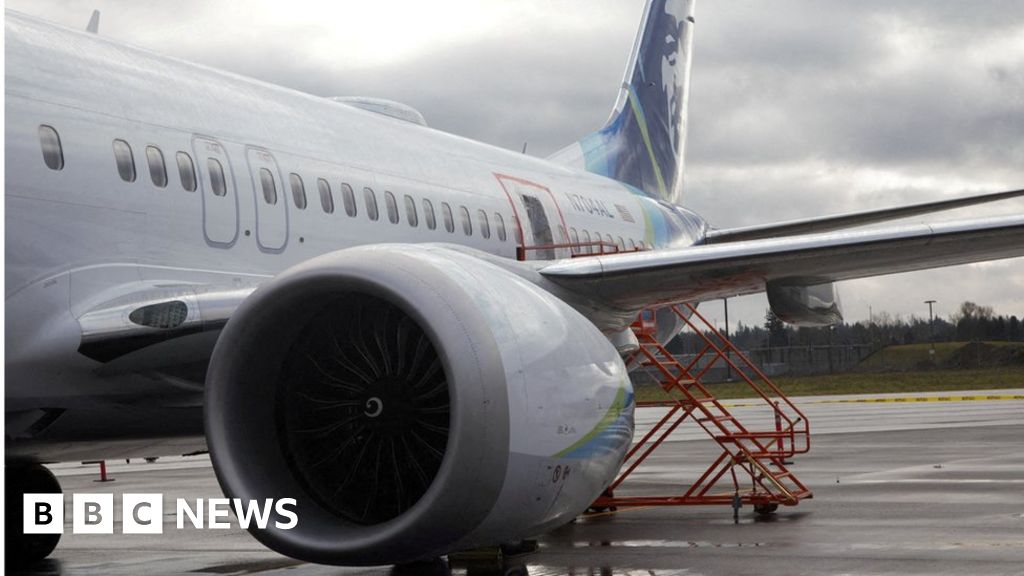
Confidence in the airline has been shaken since a panel on one of its 737 Max 9 planes broke in mid-air.
Five years after two fatal crashes involving different versions of the company's planes, the incident raises new questions.
Mr. Calhoun is trying to show the company is taking the situation seriously.
He apologized in a call with financial analysts and said the company would take responsibility no matter what conclusion an ongoing formal investigation into the cause reached.
“We are the ones who caused the problem and we understand it,” he said. “We have to do better.”
The quarterly update to investors marks the company's first since the Alaska Airlines flight disaster that terrified passengers and forced an emergency return to the Portland, Oregon, airport with no serious injuries. Become.
Mr. Calhoun previously blamed it on a “high-quality escape.”
Reports suggest the panels were improperly installed when the plane left Boeing's factory.
The move has brought new scrutiny to the company's manufacturing performance, which critics say has worsened as the company pushes to cut costs and shorten delivery times.
The US Federal Aviation Administration (FAA) has launched an investigation into Boeing's manufacturing processes and banned the company from expanding production of its popular 737 aircraft.
Some of the company's major airline customers also expressed concern, saying the issue could delay approval of new versions of the 737 aircraft in development.
Mr. Calhoun said the company would follow the guidance of regulators.
He said: “We are aware that any moment that can impact delivery times can be frustrating for customers and investors, but quality and safety must come first.” .
“We're going to go slow to go fast, and if that's necessary, we're going to encourage and reward employees who speak up to slow things down,” he said.
On a conference call with investors, Mr. Calhoun limited his prepared remarks to the company's response to the Alaska Airlines emergency.
The company also said it would not provide formal financial guidance for fiscal 2024.
“While we often share and update our financial and operational goals at this time of year, now is not the time,” Calhoun said in a letter to staff accompanying the financial statements.
Analysts asked Mr. Calhoun how the turmoil will affect the company in the coming years, even though the company was in the spotlight after the crash in 2018 and 2019. Some questioned how the blunder occurred.
The emergency has prompted calls among aviation safety campaigners for new leadership and for the removal of Calhoun, who has served on the board since 2009 and became chief executive after the recent accident. It's increasing.
“They had a chance. They failed. They can't or won't do the job, so they should go,” said the man who lost his daughter in the Ethiopian Airlines Boeing 737 Max 8 crash. said Michael Stumo, now a vocal airline safety advocate.
The manufacturing giant is currently producing 737 aircraft at a rate of 38 aircraft per month, according to its latest investor information for the September-December period.
Revenues rose 10% to $22 billion, but the company's loss narrowed to $283 million in the quarter.
