

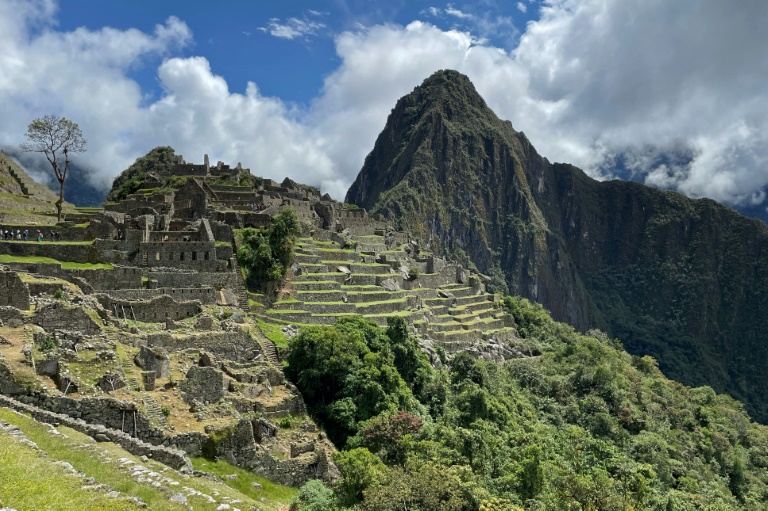

Protests that halted tourism at Peru's famous Incan citadel, Machu Picchu, for six days have been called off following an agreement between the government and residents, both sides announced on Wednesday.
The strike began after the government's decision to privatize ticket sales to the country's most visited archaeological sites, leading to around 1,200 tourists caught up in the protests being evacuated by train, some of them Some people did not pay attention to ancient ruins).
“There is good news that the strike will be lifted,” Culture Minister Leslie Urteaga said on RRP radio station, adding that the contract to hand over ticket sales to a private company would be cancelled.
Residents' spokesperson Darwin Baca confirmed the decision to “end the indefinite strike”, reopen businesses around the site and lift the blockade on the railway leading to Machu Picchu.
“Tourism activities are becoming normalized,” he added.
Official calculations put the strike at a cost of $263,000 per day.
The new ticket sales system was billed by the Ministry of Culture as a way to manage visitor flow at popular historical sites and curb corruption related to in-person ticket sales.
Peruvian company Joinus began operating the online ticketing business on January 20 and was scheduled to run it until August.
The government and residents agreed to continue selling tickets as long as there is a “transition process” to a new government-run platform.
“Every effort is being made to break free from the mafia that illegally exploits ticket sales, and we will not back down from the need to change this model of corruption,” Culture Ministry chief Alberto Otarola said in a statement. Told. .
Last January, Machu Picchu was closed for 25 days amid protests over the impeachment and arrest of then-President Pedro Castillo.
And last September, Peru temporarily closed three sectors of the site due to the high volume of visitors.
Machu Picchu, located northwest of the city of Cusco, was built in the 15th century at an altitude of 2,500 meters (8,200 feet) by order of the Incan ruler Pachacutec.
Considered an architectural and engineering marvel, it was declared a UNESCO World Heritage Site in 1983.
Tourism is key to Peru's economy, and before the coronavirus pandemic in 2020, the country was visited by about 4.5 million tourists a year.
The number of daily admission tickets to the Citadel has increased from a maximum of 3,800 to 4,500 tickets per day starting this month.
cm/bell/mar/FB/DW
