


Hundreds of Xiaomi SU7 electric sedans were spotted in a parking lot near the Beijing factory, suggesting that mass production has already begun. Chinese media previously reported that the new EV will enter SOP (start of production) in February, reach 2,000 units per month in March, and increase to 10,000 units per month by July.
– Advertisement –
This EV is produced on contract in Beijing by BAIC Off-Road Vehicle Co., Ltd., a subsidiary of Beijing Automobile Industry Holding Co., Ltd. (BAIC). Interestingly, BAIC also produces Mercedes-Benz vehicles in China under the joint venture Beijing Benz, which was founded in 2005 and is 51% owned by BAIC.
BAIC Motor is also a major Chinese shareholder in Mercedes-Benz itself, holding a 10% stake in the German legacy manufacturer. The other company, Geely Automobile, holds an additional 10%.
– Advertisement –
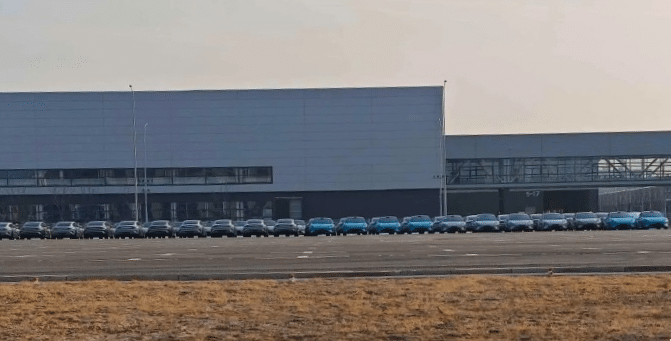
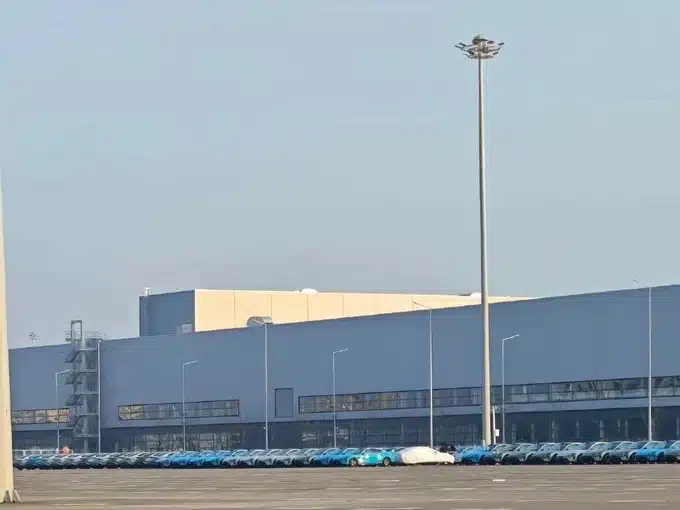

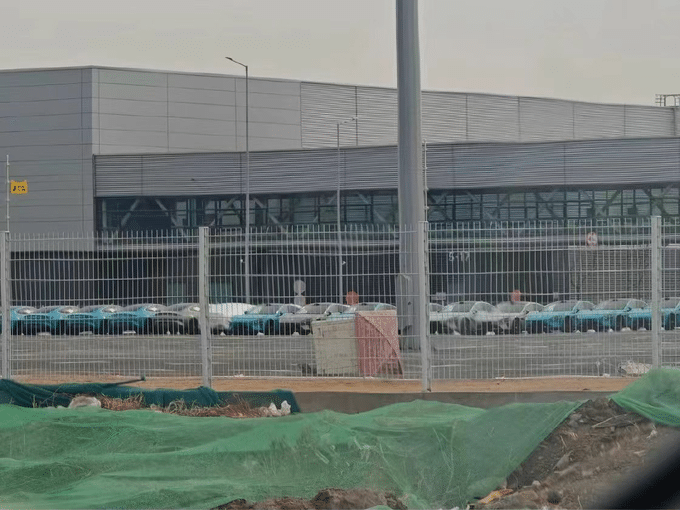
Prototyping of the SU7 began in December, with Xiaomi building 300 prototype vehicles for testing purposes. CarNewsChina reported that road and track tests were conducted in China, and Xiaomi recently made headlines in Chinese media after its test vehicle crashed on a snowy road.

On February 8, Xiaomi released a winter test video that flexibly tests the electric sedan's sports functions in the frigid -33℃ near Heihe city in northern China. Xiaomi CEO Lei Jun said in his press conference that Xiaomi wants to be the champion of winter range and efficiency, and highlighted the advantages of its self-developed heat pump.
The consumer electronics giant officially announced the Xiaomi SU7 on December 28th. This performance version is called Max and is AWD with maximum power of 495kW (664hp) and torque of 838Nm. This is enough for a 0-100km/h acceleration of 2.78 seconds and a top speed of 265km/h. The electricity is stored in his CATL ternary (NMC) 101 kWh battery and is suitable for his 800 km journey in the CLTC (China Light Vehicle Test Cycle). This EV also features an 875V architecture, so you can expect fast charging.
– Advertisement –
A standard rear-wheel-drive version with a maximum power of 220 kW (295 hp) and 400 Nm of torque was also announced. 0-100km/h acceleration is 5.28 seconds. The battery capacity is 73.6 kWh and the range under CLTC is 668 km.
The battery can charge 390 km in 10 minutes, which is more than a Tesla Model S Plaid. Xiaomi claims that the SU7 can add 220 km in 5 minutes and 510 km in 15 minutes.
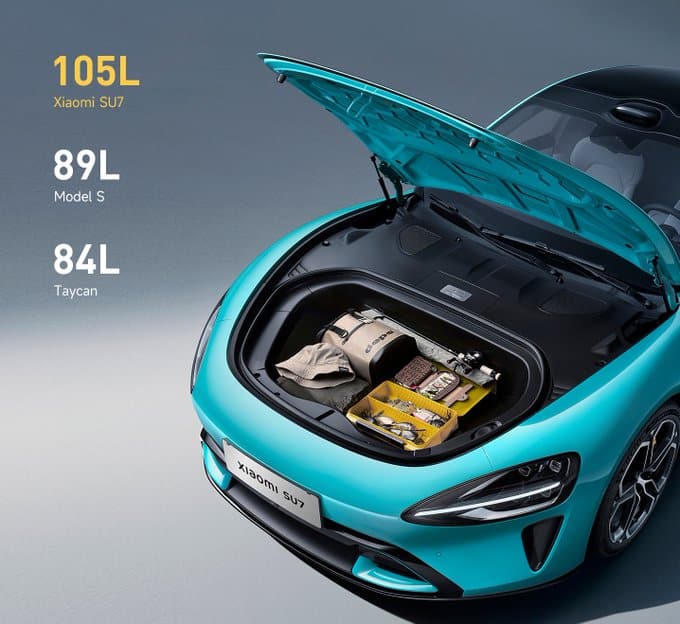
The SU7 is built on Xiaomi's Modena platform and is slightly longer than its main competitor, the Porsche Taycan. The dimensions are 4997/1963/1455mm (L/W/H), and the wheelbase is 3000mm. This car has a trunk space of 517 liters with a flank of 105 liters.
The price of the car is unknown, with some Chinese media reporting that it would cost 361,400 yuan (US$50,350), but Xiaomi simply denied this was false. Lei Jun previously said that some fans have unrealistic expectations about the price and would like people to stop trolling by speculating prices such as 99,900 yuan (US$14,000) or 149,900 yuan (US$21,000). CarNewsChina expects the price to be around 300,000 yuan (US$42,000).

The release date is still not officially known, but Lei Jun previously said it would be in the first half of this year. We will continue to pay attention to this project.
