

Published date: February 5, 2024 09:26 (EAT)

Years of conflict and war have ravaged Laikipia County, with neighboring communities competing for scarce resources to feed their families and livestock.
The county is home to both farmers and pastoralists occupying the northern, eastern and western constituencies.
Therefore, although most conflicts occur in the northern part of the county, they often extend to the west and east.
Laikipia's seasonal violence can be attributed to a variety of factors, including its location, geography, and cynical manipulation by politicians.
Surprisingly, almost 50% of the land in Laikipia County is owned by large ranchers, of which less than 30 are large ranchers.
The county borders pastoralist Baringo, Samburu and Isiolo counties, where farmers own large herds of cattle, and where much of the land owned by pastoralists lies idle. We recognize that this is the case.
In Kenya, pastoralists take pasture, water, and grassland for their livestock wherever they can find it. This is because pastoralism is livestock-driven and herders go to extreme lengths for their animals.
This therefore explains why they habitually invade Laikipia during the dry period from January to April, causing conflict each time.
The district borders the semi-arid districts of Isiolo, Samburu and Baringo, all of which are inhabited by nomadic herders, and drought has forced pastoralists to seek water and lush pastures in Laikipia. The search for this has led to bloody clashes that are repeated every dry season.
To combat this, a fertilizer company stepped in to provide a solution and control the rampage of violence. Introducing innovative agricultural techniques not only regenerates local soils, but also feeds local communities and significantly reduces conflicts and tensions over resources.
With carbon fertilizers being used in the region for at least a year now, the GPC Carbon Farming Group has begun to unite communities, solve endemic problems, end bloodletting, and even bring physical violence between mortal enemies. It even brought about some kind of contact.
On February 2, GPC CEO Joe Kariuki brought together more than 600 people from some of the most violent communities to the same table to feast, mingle, build peace, and support each other. vowed to end hostilities.
The event was held at Kariuki's huge Laikipia farm in the Rumuruti region, where various tribes including Kikuyu, Samburu, Maasai, Meru and Turkana performed a ritual of eating cows, as well as promoting carbon farming, conservation and We came together to raise awareness about the need for conservation. and regenerate the soil.
“For many years now, the soil in this region has not yielded results. Farmers have actually stopped farming, and this is the cause of constant strife and bloody battles between communities here. A lot has happened since I moved here over a year ago. I witnessed a magical transformation of the area and people returning to their farms, ending the violence and senseless fighting over resources. “I did,” Joe Kariuki said.
Laikipia's harsh environment means its residents are susceptible to being elected by manipulative politicians. Politics plays a role in the region because poor and marginalized communities feel forgotten by the state and are therefore easily influenced.
“We realized how easy it is for politicians to take advantage of these people and incite conflict,” Joe added. “This is one of the things we talked about and warned people about, that these communities that don't normally see eye to eye can come together and share a meal and forgive each other and create a new brotherhood. The purpose is to move forward with a feeling.”
GPC Fertilizer and its subsidiaries were introduced to Rumuruti Farm in early 2023. So far, thousands of farmers have benefited from the company's program and gone home with a meager harvest in a scheme praised for changing lives and restoring harmony. amidst the unstable situation in the region.
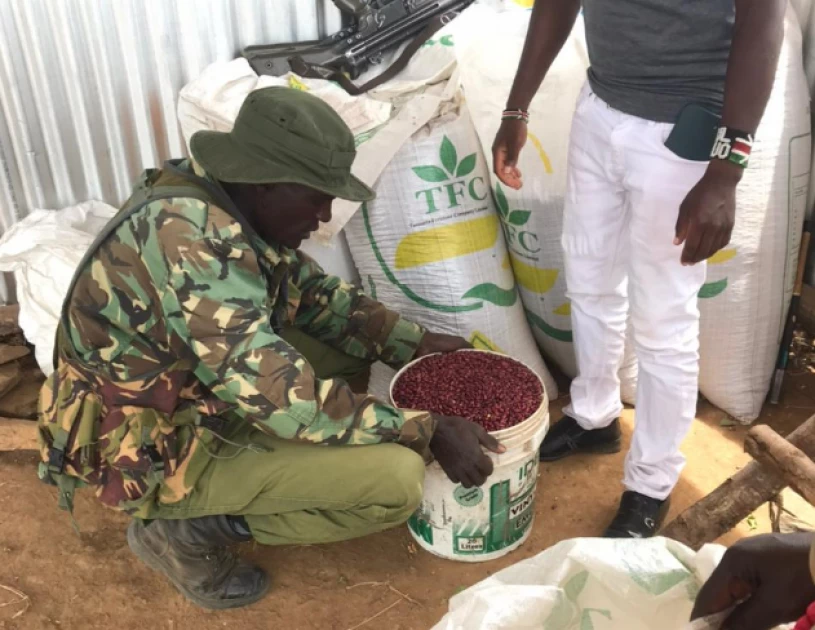
In addition, all selected farmers from different communities were given free bags of corn, beans, and a variety of other agricultural products, making GPC a reality on its promise to change lives and restore communities.
