

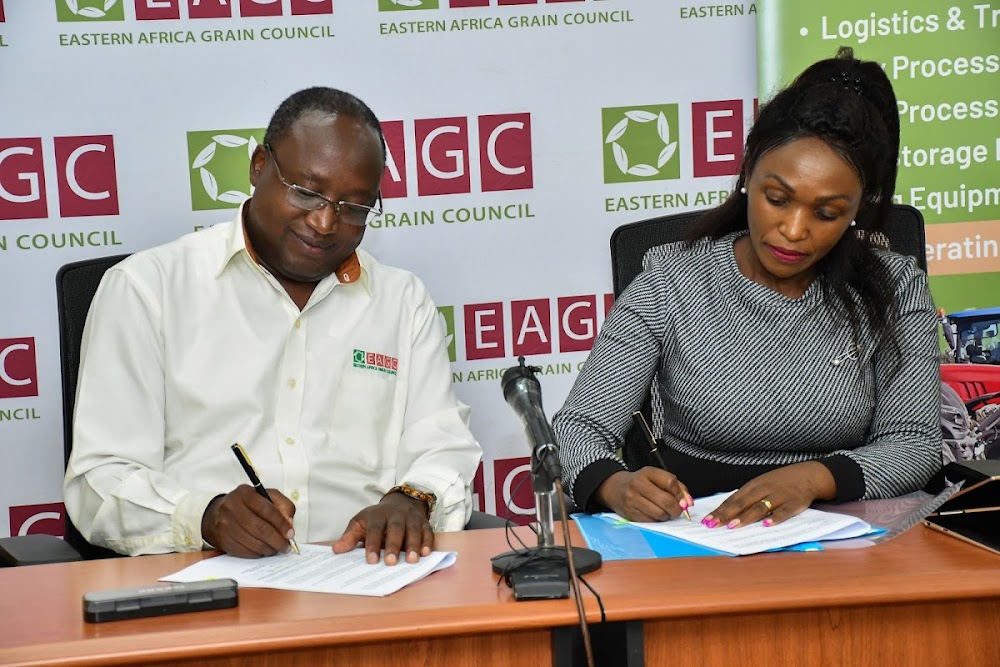
East Africa's grain trade is struggling in terms of quantity, quality and safety. As a result, these affect prices and consumer health.
star reporter agatha goto We spoke to Gerald Masira, Executive Director of the East African Grains Council, about the challenges facing the region's grain trade over the years.
What is EAGC? What does it do?
The East African Grains Council is a council of companies and organizations in the grain value chain of the East African region. It is not for profit and its primary objective is to ensure that high quality and safe grain is produced and traded through the supply chain in an efficient and comprehensive manner, thereby minimizing costs. The goal is to reduce costs and improve return on investment.
EAGC members include small-scale farmers, medium-sized and large commercial farmers, grain traders and warehouse operators who trade grain in bulk, and processors who accept grain raw materials.
What kind of value chain do you deal with?
Our main grains and pulses include corn, wheat, rice, sorghum, beans, green gram, pigeon peas, dolichos (njahi), lentils, soybeans, etc.
What is the situation with grain trade in the region? Is it improving or is it stalled?
The region's grain trade has faced serious challenges throughout the value chain for many years. The main challenges are production and volume, quality and safety, both of which affect prices and health for consumers.
Climate change is also a seasonal challenge, increasing the frequency of droughts and impacting production. Since 2017, Kenya has suffered a severe crop failure, leading to maize supply shortages and melodramatic increases in maize prices, leading to significant increases in the prices of processed foods such as maize flour and other items.
Maize prices reached an unprecedented high of Sh7,200 per 90kg bag in July 2023 from an average price of Sh3,500 in 2020-2021. The recent harvest in Kenya has increased supply, pushing prices back to an average of Sh4,500. This is a huge relief for consumers.
Has the increase in the value of the dollar affected grain trade?
The shortage of hard currency, primarily used for international trade, is also having a negative impact on trade flows, as it becomes difficult to settle trade when foreign currency is not available.
There are increasing reports of countries banning the export of grain from the country of origin. Has this affected trade? If so, how?
Trade logistics such as warehousing, transportation, and border inspections are also major challenges affecting grain trade.
A positive enabler of the region's cross-border grain trade is its diverse agroecology, which provides grain harvests throughout the year.
Trade policies, particularly temporary trade restrictions leading to import and export bans, have seriously affected grain trade in the region.
Trade flows generally flow from surplus producing regions such as Uganda and Tanzania to deficit producing regions such as Kenya, Rwanda, South Sudan, Burundi and the Democratic Republic of the Congo. November to March is usually the harvest season, so trade volumes to Kenya are reduced. During the remaining months, when Uganda and Tanzania are in harvest season, the main grain trade flow goes to Kenya. Exports of grains from outside the region, especially pulses, are increasing to regions such as India, Pakistan, and Europe.
Is EAGC working on new technologies to ensure safety?
Yes, the EAGC has been working with governments and other private sector actors on many new solutions, interventions and technologies, especially to ensure food safety and improve value chain efficiency. .
EAGC has been at the forefront of developing and harmonizing standards for cereals and pulses in the East African region and working closely with stakeholders to support implementation and compliance with the standards. Partners working with EAGC include AGRA, USAID, Trade Mark Africa, Royal Danish Embassy, and SIDA.
EAGC worked closely with the Bureau of Standards and with support from USAID to develop and publish standards for sealed storage techniques. This uses the principle of suffocation (the insects in the grain storage bag are deprived of oxygen and suffocate). Kenya was the first country in the world to develop this standard, which is currently being harmonized by the EAC. This standard eliminated substandard bags masquerading as sealed bags and resulted in the private sector investing heavily in the production and distribution of sealed bags. Farmers are increasingly using bags to store food on the farm and are recording savings on the purchase of fumigation chemicals.
Decontamination of grains with aflatoxins using ozonation is another innovation that the EAGC is working on in collaboration with its members and other partners. So far, his one ozone decontamination facility has been installed and commissioned by EAGC member Pela Commodities in Soroti, Uganda. The facility is supplied by a Danish company called iGrain. In Kenya, with support from Trademark Africa with funding from the Government of Canada, two ozone equipment plants were acquired and installed at the National Grains and Agricultural Products Board complex in Bungoma and Nairobi. These units will be commissioned soon and thereafter made available to interested parties.
The GSoko grain trading system, originally developed with support from UKAID, is a new technology that the EAGC is working on to facilitate grain trading. The system features aggregation center technology commonly known as Grain Trading Business Hub (GHuB). These are farmer-owned and operated warehouses that aggregate agricultural produce for bulk sale to the market and aggregate demand for raw materials for supply from partner service providers at negotiated and competitive prices. GSoko Trade Desk continuously facilitates domestic and cross-border trade and publishes a weekly trade catalog listing all sales offers and purchasing inquiries.
EAGC will work closely with the Warehousing Systems Council and the new Kenya Multi-Commodity Exchange to build capacity, provide ICT systems, and educate value chain stakeholders on the mechanics and benefits of structured trading through warehousing and commodity exchange trading. We are working to improve the mobilization and sensitivity of people. Incentivize intake.
