

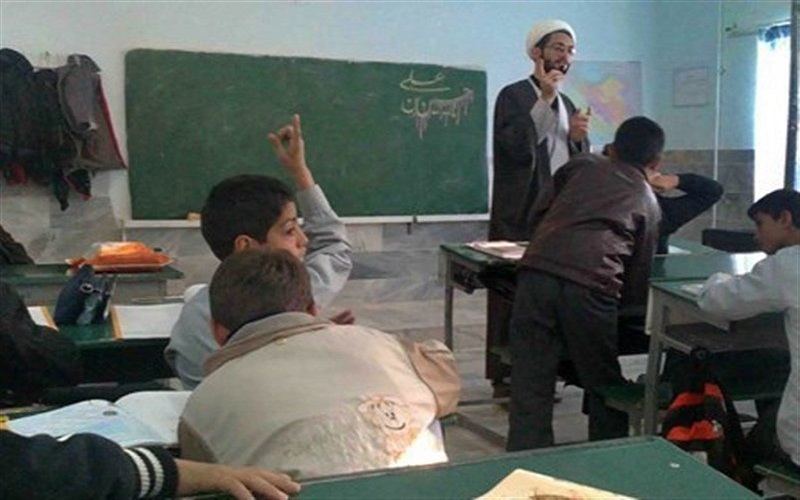
Iranian schools have been under stress for the past two years, marked by student protests, the presence of law enforcement on campus, a series of unexplained poisonings, and reports that seminary scholars are teaching at the schools. is causing concern.
These factors create a unique atmosphere in educational settings, and the main victims are students who experience declines in academic performance.
The problem of poor student academic performance is not new, but the 2023 statistics reveal that this decline is getting worse.
In the fields of experimental science, mathematical science, and humanities, the average GPA of students from 2019 to 2023 decreased significantly. This educational decline is particularly pronounced in rural areas facing high levels of deprivation.
According to sociologist Reza Omidi, quoted by Khabar Online, “The map of GPA status in each state is almost in line with the poverty map of the country.''
A variety of factors contribute to educational decline, including personal, familial, social, and economic challenges. However, some experts attribute this situation to negligence within the education system.
The root cause appears to be the inefficiency of Iran's educational structure, which fails to add real value to students.
A high GPA is often the result of an individual's efforts based on the goal of getting into a reputable university, either domestically or abroad.
Economic and social pressures further exacerbate these challenges, as the education provided is not compatible with Iran's job market.
Additionally, the lack of qualified and experienced teachers is negatively impacting the quality of education.
In September 2023, the Deputy Director General of Planning and Resource Development at the Ministry of Education pointed out that there is a shortage of 200,000 teachers.
To address this shortcoming, the ministry relied on seminary scholars rather than qualified experts, a move that was met with criticism and concern.
The infiltration of seminary scholars into various fields, including education, has sparked controversy. Critics argue that this strategy aims to reduce the presence of professional teachers in schools.
Baharam Dalil, a member of Qom Seminary, expressed concern that such recruitment could lead teachers to resent religious authorities.
Rahim Ebadi, a former deputy education minister, likened the situation to the Middle Ages, when European clerics were employed as religious missionaries in schools, resulting in a decline in religion.
The nationwide protests in 2022 appear to intensify the regime's efforts to repress students and young people, implementing “cleansing” policies that extend from universities to schools.
The regime's focus on eliminating professionals deemed “not loyal to the principles of the Islamic Republic” mirrors actions taken at universities.
The purges created a shortage of professional teachers, and the regime resorted to hiring scholars from seminaries and establishing schools in mosques.
For many, the administration's priority appears to be ideological compliance rather than improving the quality and quantity of schools.
As a result, individuals with more financial means are choosing to enroll their children in neighboring countries such as Turkey.
